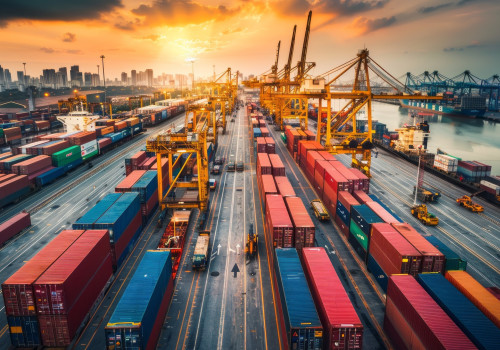
As freight shipping networks expand across regions and industries, an often overlooked consequence is the sharp increase in demand for structured waste management services. Every stage of freight logistics—packing, loading, unloading, repackaging, and redistribution—generates significant volumes of waste materials. These include wooden pallets, cardboard packaging, shrink wrap, broken crates, and damaged shipping containers that accumulate rapidly in warehouses and distribution hubs. As global trade intensifies and supply chains become more complex, the volume of these materials grows in direct proportion to shipping activity. This creates a consistent need for efficient disposal systems that can keep pace with high-frequency cargo turnover without disrupting operations or creating unsafe working conditions in freight yards and storage facilities.
Warehouse Expansion and Packaging Waste Accumulation
Freight expansion typically leads to the rapid development of new warehouses, fulfillment centers, and distribution terminals. While these facilities are designed to optimize storage and movement of goods, they also become major sources of packaging waste. Each incoming shipment often requires unpacking, inspection, repackaging, or redistribution, all of which generate residual materials that must be removed quickly to maintain workflow efficiency. Without a reliable waste removal system, these materials can pile up in loading docks and staging areas, slowing down operations and increasing safety hazards for workers operating forklifts and heavy machinery. To maintain operational flow, logistics managers integrate waste handling strategies directly into their facility design, ensuring that disposal points are accessible and that removal schedules align with peak shipping cycles.
Freight Network Complexity and On-Site Waste Coordination
As freight shipping expands across multiple transportation modes—air, rail, truck, and sea—the coordination of waste management becomes increasingly complex. Each transfer point introduces new opportunities for packaging damage, repacking, and disposal needs. In high-volume logistics hubs, waste must be managed continuously to prevent congestion in loading areas and maintain compliance with safety regulations. This is especially critical in cross-docking facilities where goods are rapidly transferred between inbound and outbound vehicles with minimal storage time. In such environments, scalable waste solutions are essential, and providers like dumpster rentals in Wallingford CT often become integrated into logistics planning to ensure that waste disposal capacity can expand alongside freight volume without causing operational delays or inefficiencies.
Efficiency Pressures in High-Volume Supply Chains
Freight shipping expansion places significant pressure on efficiency, forcing logistics operators to optimize every aspect of their workflow, including waste removal. Delays in clearing debris can slow down loading schedules, reduce dock availability, and create bottlenecks that ripple across the entire supply chain. As a result, waste management is no longer treated as a secondary service but as a critical operational component. Companies increasingly rely on scheduled dumpster rotations, rapid pickup services, and on-site containment systems to ensure uninterrupted workflow. This integration allows freight handlers to maintain strict delivery timelines while managing the byproducts of high-volume shipping activity in a controlled and predictable manner.
Sustainability, Scaling, and the Future of Freight Support Services
As freight networks continue to grow, sustainability concerns are also shaping how waste is handled within logistics ecosystems. Companies are under increasing pressure to reduce landfill contributions and improve recycling rates for packaging materials. This has led to more structured waste segregation systems within freight hubs, allowing recyclable materials to be processed separately from general debris. Scalable dumpster services play a key role in this transition by providing flexible capacity that adjusts to seasonal shipping fluctuations and long-term growth trends. Over time, the relationship between freight shipping and waste management will continue to strengthen, with efficient disposal systems becoming a foundational part of global logistics infrastructure that supports both economic growth and environmental responsibility.